Loading...
First Round of Abstract Submission Ends: Dec 31, 2026
Extended Early Bird Ends: Jun 28, 2026

Plenary Speakers

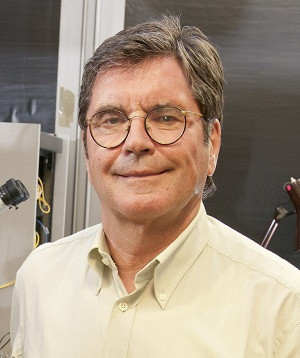
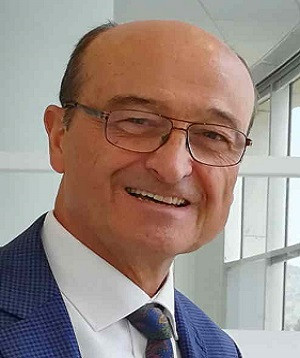
Prof. Dieter Bimberg
CIOMP of CAS, Changchun and TU Berlin, Germany
Title: To be confirmed.
Dieter Bimberg received the Ph.D. magna cum laude from Goethe University, Frankfurt, Germany. He held for 7 years a Principal Scientist position at the Max Planck-Institute for Solid State Research, Grenoble, France. After serving as a Professor of Electrical Engineering, Technical University of Aachen, Germany, he assumed the Chair of Applied Solid-State Physics at Technical University of Berlin. He is the Founding Director of its Center of NanoPhotonics. He was holding guest professorships at the Technion, Haifa, U.C. Santa Barbara, CA, USA, and at Hewlett-Packard in Palo Alto, CA. He was Distinguished Adjunct Professor at KAU, Jeddah 2012-2018. In 2018 he was appointed as executive director of the “Bimberg Chinese German Center for Green Photonics” at the Changchun Institute of Optics, Fine Mechanics and Physics of the Chinese Academy of Sciences. He is a member of the German Academy of Sciences Leopoldina, the EU Academy of Sciences, a Foreign Member of the Russian Academy of Sciences, the US Academies of Engineering and of Inventors, Fellow of the Chinese Optical Society, a Life Fellow of the American Physical Society and the Institute of Electrical and Electronics Engineers, IEEE, a Fellow of the Chinese Optical Society, Vice-President of the International Artificial Intelligence Association and a honorary member of the Ioffe Institute of the RAS. He is recipient of many important international awards, like the UNESCO Nanoscience Award, the Max-Born Award and Medal of IoP and DPG, the Heinrich-Welker-Award, the Nick Holonyak Jr. Award, the Oyo Buturi and MOC Awards of the Japanese Society of Applied Physics, the Jun-Ichi Nishizawa Medal and Award of IEEE, the Stern-Gerlach Award of DPG (the highest German physics award), to mention a few. He received honorary doctorates of the University of Lancaster, UK, and the St. Petersburg Alferov University of the Russian Academy of Sciences. He has authored more than 1600 papers, 71 patents and patent applications, and six books. The number of times his research works has been cited exceeds 69,000 and his Hirsch factor is 115 (@ Google Scholar). His research interests include physics and technology of nanostructures, nanostructure based photonic and electronic devices, and energy efficient data communication.
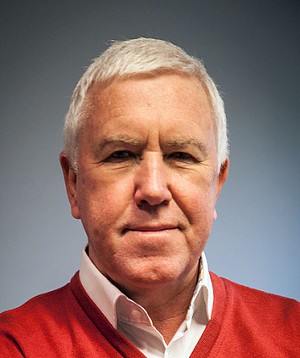
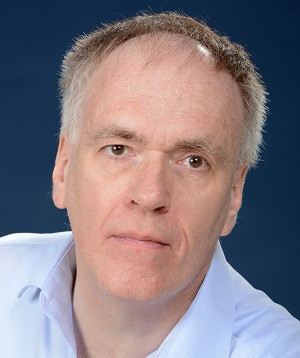
Prof. Ibrahim Abdulhalim
Tel Aviv University, Israel
Title: Tunable Photonic Metamaterials for Imaging, Sensing, and Energy Saving
Ibrahim Abdulhalim studied Physics at the Technion, where he received his D.Sc. in 1988. He has been a Professor in the Department of Electro-Optics and Photonics Engineering at Ben-Gurion University since October 2005 and served as Head of the Department from 2007 to 2015. Before this position, he held research and professional roles in both academia and industry, including at the Optical Computing Systems Center at the University of Colorado Boulder, the Optoelectronics Research Centre (ORC) at the University of Southampton, the Thin Films Centre at the University of the West of Scotland, as well as companies such as KLA-Tencor, Nova Measuring Instruments, and GWS Photonics. His current research focuses on liquid crystal (LC) devices for photonic applications, energy-saving optoelectronic devices, nanophotonics and plasmonics for biosensing, and biomedical optical imaging techniques. Prof. Abdulhalim has published over 300 scientific articles, co-authored two books and 12 book chapters, and holds more than 25 granted patents. He is a Fellow of the Institute of Physics (IoP) and SPIE, and a Senior Member of OPTICA. He has served as Associate Editor for the SPIE Journal of Nanophotonics and the Journal of Imaging, and currently serves as Topical Editor for Applied Optics and Associate Editor for the journals Biosensors and Sensors. He has also founded two startup companies: Photonicsys, specializing in miniature photonic sensing instruments, and Photoliqsys, focusing on liquid crystal devices and their integration into systems.
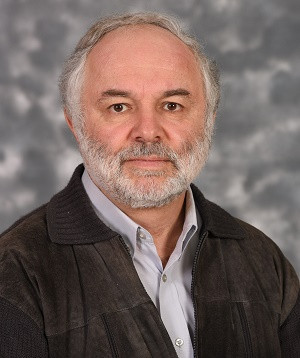
Prof. Boris N. Chichkov
University of Hannover, Germany
Title: Photonic approach to quantum wave mechanics of particles
Professor at the Leibniz University Hannover, Institute of Quantum Optics, Hannover, Germany.
He graduated with honors and received PhD in Physics from Moscow Institute of Physics and Technology in 1981. He started his scientific carrier at P.N. Lebedev Institute of Physics, Russian Academy of Sciences in Moscow and later worked in many research centers worldwide. At present, he is Professor of Physics at Leibniz University Hannover, Institute of Quantum Optics and Chair of Nanoengineering. In 2024 he received the Julius Springer Prize for Applied Physics.
Scientific areas: laser physics and laser applications, nanoengineering, additive manufacturing technologies, quantum and nonlinear optics, nano- and biophotonics, biomedical implants and devices, tissue engineering and regenerative medicine.
Prof. Ze Xiang Shen
Nanyang Technological University, Singapore
Title: To be confirmed.
Dr. Ze Xiang Shen is Fellow of Singapore National Academy of Sciences, Foreign Member of Russian Academy of Sciences. He is Professor of Physics, Professor of Materials Science and Engineering, Co-Director, Centre for Disruptive Photonics Technologies. He is also Associate Dean, Graduate College, Nanyang Technological University.

His research involves the study of graphene, 2D materials and Perovskites using ultra-Low wavenumber Raman spectroscopy, photoluminescence and time-resolved spectroscopy in combination with high pressure and low temperature. He also works on applications of graphene-based composites, such as energy storage, 3D printing, building materials, environmental protection, and enforced materials and structures.

He is winner of NTU Nanyang Award for Research and Innovation, Gold Medal for Research Excellence by Institute of Physics Singapore. He was awarded Outstanding Immigrant Award in 2019. He is a Global Highly Cited Researcher by Clarivate Analytics.
Prof. Halina Abramczyk
Lodz University of Technology, Poland
Title: To be confirmed.
She's a full professor at the Lodz University of Technology, founder and director (1992-2023) of the Laboratory of Laser Molecular Spectroscopy. Her research focuses on developing diagnostic methods for early cancer detection using Raman spectroscopy, Raman molecular imaging, and femtosecond laser spectroscopy.

Some of her notable achievements include

• Awards and Honors:
o Fulbright Award
o Marie Curie Chair at Max Born Institute, Berlin
o President of the Polish Fulbright Alumni Association (2013-2021)
o Featured in various international scientific communities
• Research and Publications:
o Over 240 publications, including 140 JCR scientific articles
o Authored books like "Introduction to Laser Spectroscopy"
o Published papers on molecular spectroscopy, laser spectroscopy, and biomedical diagnostics
• Professional Affiliations:
o Member, Editorial Board of Journal of Molecular Liquids (1992-present)
o Board member, European Molecular Liquids Group (1992-2015)
o Member, Scientific Reports (Nature) editorial board (2018-present)

Professor Abramczyk has delivered numerous plenary and invited lectures globally and has collaborated with various international institutions, including the Max Born Institute , Cambridge University, the University of Arizona. Her work has significantly contributed to the development of cancer research.
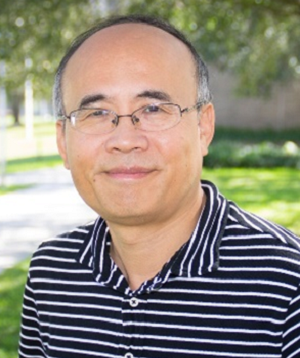
Prof. Huabei Jiang
University of South Florida, USA
Title: To be confirmed.
Will update soon.
Dr. Vitaly Shchukin
CSO, Vertically Integrated (VI) Systems GmbH, Germany
Title: To be confirmed.
To be confirmed.
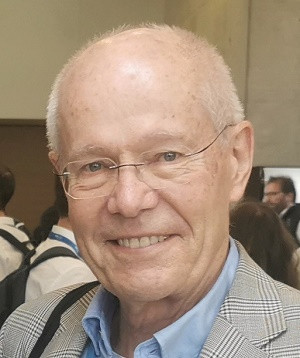
Prof. Wolfgang Kautek
University of Vienna, Austria
Title: To be confirmed.
Will update soon.