Loading...
First Round of Abstract Submission Ends: Dec 31, 2026
Extended Early Bird Ends: Jun 28, 2026

Keynote Speakers

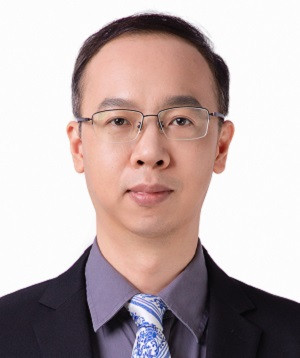
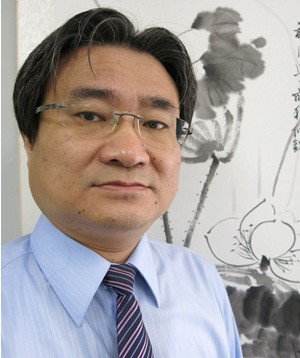
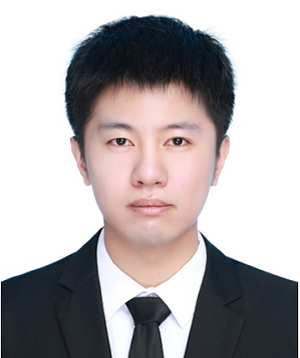
Prof. Rui Chen
University of Macau, China
Title: Core-Crown CdSe Nanoplatelets: from Property Tailoring to Optoelectronic Applications
Dr. Chen holds dual PhD degrees from Xiamen University (Microelectronics and Solid-State Electronics) and Nanyang Technological University (Physics and Applied Physics). His research focuses on semiconductor optics, defect engineering for optical synapses, quantum light sources, and microlasers. Prior to joining the Institute of Applied Physics and Materials Engineering (IAPME) at the University of Macau as an Associate Professor, he was a Professor in the Department of Electrical and Electronic Engineering at the Southern University of Science and Technology (SUSTech), China. He has received several prestigious honors, including the Thousand Talents Program for Young Professionals (2014) and the Excellent Research Award for Young Scholars (2017), along with multiple teaching awards such as Excellent Teacher of the Year (2019) and Most Popular Instructor (2024). Dr. Chen has published over 200 papers in leading journals such as Advanced Materials, Advanced Functional Materials, and Nano Letters, with more than 13,000 citations and an h-index of 66. He is also actively engaged in academic service, serving as Associate Editor and Editorial Board Member for several journals, including Scientific Reports (Springer Nature), VIEW (Wiley), and Chip (Elsevier).
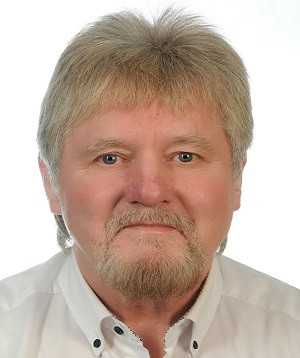
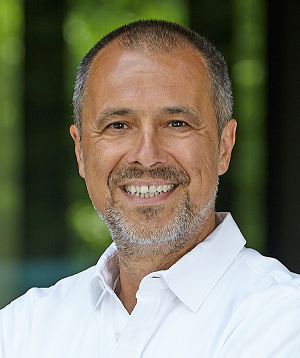
Prof. Wolfgang Osten
University of Stuttgart, Germany
Title: To be confirmed
Wolfgang Osten received the MSc/Diploma in Physics from the Friedrich-Schiller University Jena in 1979. From 1979 to 1984 he was a member of the Institute of Mechanics in Berlin working in the field of experimental stress analysis and optical metrology. In 1983 he received the PhD degree from the Martin-Luther-University Halle-Wittenberg for his thesis in the field of holographic interferometry. From 1984 to 1991 he was employed at the Central Institute of Cybernetics and Information Processes ZKI in Berlin making investigations in digital image processing and machine vision. Between 1988 and 1991 he was heading the Institute for Digital Image Processing at the ZKI. In 1991 he joined the Bremen Institute of Applied Beam Technology (BIAS) to establish and to direct the Department Optical 3D Metrology till 2002. From September 2002 till October 2018 he has been a full professor at the University of Stuttgart and director of the Institute for Applied Optics. From 2006 till 2010 he was the vice rector for research and technology transfer of the Stuttgart University. His research work is focused on new concepts for industrial inspection and metrology by combining modern principles of optical metrology, sensor technology and digital image processing. Special attention is directed to the development of resolution enhanced technologies for the investigation of micro and nano structures. Wolfgang Osten is fellow of OSA, SPIE, EOS, SEM, IAAM, and senior member of IEEE. He is a Honorary Professor of the Shenzhen University, China, a Honorary Doctor of the University of Technology of Ilmenau, Germany, the 2011 recipient of the Dennis Gabor Award of the The International Society for Optics and Photonics SPIE, the 2018 recipient of the Rudolf Kingslake Medal of the SPIE, the 2019 recipient of the Chandra Vikram Award of the SP
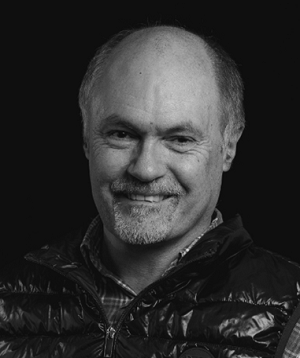
Prof. Ortwin Hess
The University of Dublin, Ireland
Title: To be confirmed
Will Update
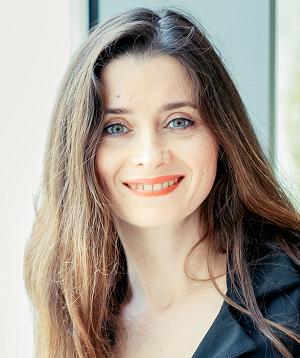
Prof. Alina Karabchevsky
Ben-Gurion University of the Negev, Israel
Title: To be confirmed
Will be updated soon
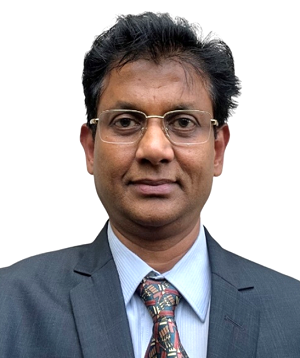
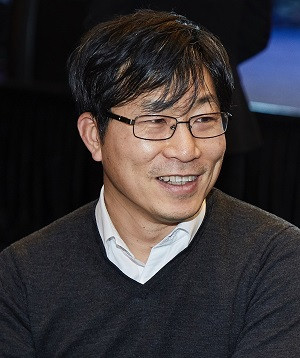
Dr. Jegadesan Subbiah
University of Melbourne, Australia
Title: Eco-friendly perovskite materials for renewable energy conversion and storage devices
Dr Jegadesan Subbiah received his PhD in Materials Chemistry from the National University of Singapore in 2007. After his postdoctoral research at NUS Singapore and the University of Florida, USA, he joined the University of Melbourne, Australia, in 2011 and continued his research. His research interests include organic and perovskite solar cells, Device physics of thin-film photovoltaics, Nanomaterials, Renewable energy conversion and storage, solar-rechargeable batteries, and interface engineering of organic semiconductors and electrodes. Dr Jegadesan has made a significant impact in his field, with >120 peer-reviewed journal publications and an h-index of 42. He serves as an Editorial Board member for various scientific journals, including Scientific Reports (Nature Springer), the International Journal of Photoenergy, the Interdisciplinary Journal of Chemistry, and the Solid and Open Journal of Organic Polymer Materials. He is also a Member of the Royal Society of Chemistry (MRSC), American Chemical Society, USA, the Materials Research Society (MRS), USA, and the Melbourne University Chemical Society (MUCS), Australia.
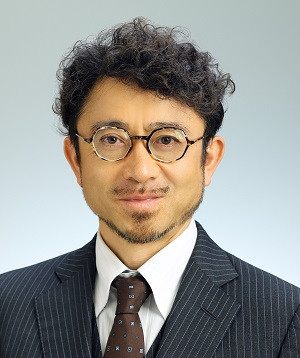
Prof. Yu-Lung Lo
National Cheng Kung University (NCKU), Taiwan
Title: To be confirmed
Yu-Lung Lo received his B.S. degree from National Cheng Kung University (NCKU), Tainan, Taiwan, and his M.S. and Ph.D. in Mechanical Engineering from the University of Maryland, College Park, USA. He has been a faculty member of the Mechanical Engineering Department at NCKU since 1996, where he is now a University Chair professor and Vice Dean of the College of Engineering/Academy of Innovative Semiconductor and Sustainable Manufacturing. He was the Director of the Instrument Development Center and Chairman of the Department of Mechanical Engineering at NCKU. He was also a visiting scientist at the University of Michigan, Ann Arbor, USA.

Dr. Lo received the ASE Chair Professor and Micron Technology Chair Professor in 2024; the Research Excellence Award from the Ministry of Science and Technology (MOST) in Taiwan, 2018/2021; Fellow of the Chinese Society of Mechanical Engineers (CSME) in Taiwan 2019; Fellow of the Society for Experimental Mechanics (SEM) in USA 2018; and ASE Scholar in Research Excellence in Taiwan 2017. Also, he received the Outstanding Professor Award from the CSME in Taiwan in 2013, the First-Class Research Award from the National Science Council (NSC) in 2005/2006, and the Dr. Ta-You Wu Award for Young Researchers from the NSC in 2002.

He was invited to serve as a keynote and plenary speaker at international conferences on optics and 3D additive manufacturing, and he also organized and chaired sections of these conferences, especially as General Chair of the International Symposium on Optomechatronic Technology in 2017. Now, he is the Chairman of the Asian Society of Experimental Mechanics (ASEM) and an Executive Council member of the American Society of Mechanical Engineers (ASME), Taiwan Section.

His research interests include biophotonics, 3D additive manufacturing, laser machining, and 3D System-in-Package (SiP) technologies. He has authored over 190 journal publications and has filed for several patents. One of his articles was included in the 2015 Spotlight on Optics by OSA. He is included in the Analysis of Stanford University’s Top 2% Scientists (Career Impact) (1960 - 2023) and Top 2% Scientists in 2021/2022/2023. Also, he is on the list of Top Scholars and Highly Ranked Scholars at Sensor from ScholarGPS.
Prof. Greg Sun
University of Massachusetts Boston, USA
Title: To be confirmed.
Will update soon.
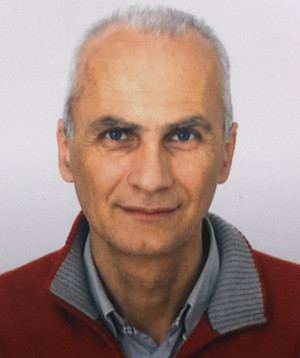
Prof. Ettore Bernardi
Indian Institute of Italian National Metrology Institute - INRIM, ItalyDelhi, India
Title: Quantum Sensing with Color Centers in Diamond
Ettore Bernardi earned his Ph.D. in 2009 from the University of Pavia. He has been with INRIM (the Italian National Metrology Institute) since 2018 and has held a permanent scientist position since 2020. His primary research interests include quantum sensing, quantum thermodynamics, and quantum computation. In recent years, his work has focused on the application of color centers in diamond as quantum sensors.
Prof. Idelfonso Tafur Monroy
Eindhoven University of Technology, Netherlands
Title: To be confirmed.
Will update soon.
Prof. Luca Poletto
CNR-Institute for Photonics and Nanotechnologies, Italy
Title: RAMAN SPECTROSCOPY ON GAS MIXTURES: APPLICATIONS TO ENERGY AND AGRIFOOD
Luca Poletto is Research Director at CNR-Institute for Photonics and Nanotechnologies (CNR-IFN) and Head of the Division of Padova of CNR-IFN.

His main scientific interests are the design and realization of spectrometers and monochromators for the extreme-ultraviolet and soft X-ray spectral regions for laboratory and space applications; the generation and applications of ultrashort femtosecond and attosecond pulses in the extreme ultraviolet; the development of instrumentation for free-electron laser radiation; the applications of techniques related to applied optics, mainly laser spectroscopy for gas detection applied to energy and agrifood.

He has been responsible of the optical design and realization of instrumentation for photon handling of ultrafast pulses that are presently in operations with high-order laser harmonics or free-electron lasers. Presently, he is participating to several projects funded by national and international institutions in the field of ultrafast optics for femtosecond and attosecond pulses in collaboration with Politecnico Milano (Italy), ELETTRA Synchrotron (Italy), DESY Synchrotron (Germany), Chinese Academy of Science (China), Freiburg University (Germany), National Institute for Scientific Research (Canada).

He has been the coordinator for CNR-IFN participation in four PNRR (National Recovery and Resilience Plan) projects: the I-PHOQS Infrastructure on technologies for ultrafast and ultraintense beams; the AGRITECH National Centre on photonic applied to agrifood; the NEST Extended Network on photonic technologies applied to energy transition; the iNEST Regional Consortium on technologies for smart manufacturing.

He was also the coordinator of the EU H2020 ATTRACT2 PiPe4.0 project for the in-situ monitoring in the distribution gas network, 2022-2025.

He is author and co-author of about 250 papers on international peer-reviewed journals. Among them, papers on Science, Nature Photonics and Nature Physics, having more than 19000 citations and H-index = 59 (Google Scholar, June 2026). He is also author of four patents in the field of laser technology.
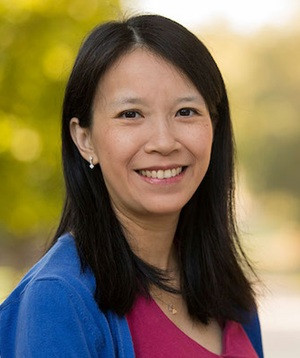
Prof. Mable Fok
University of Georgia, USA
Title: To be confirmed.
Dr. Mable Fok is currently a Professor and the Assistant Dean for Academic and Faculty Affairs at the College of Engineering at University of Georgia. She received her B.Eng., M.Phil., and Ph.D. from the Chinese University of Hong Kong. She finished her postdoctoral training at Princeton University in physical layer network security, hybrid analog/digital optical signal processing, and neuromorphic processing prior to joining University of Georgia. She is the Director of the Photonics and Soft Robotics Lab (WAVE Lab). Her research aims to bring fiber optics and photonics techniques to inter-disciplinary areas. Her research spans photonic signal processing, bio-inspired photonics, fiber optic sensing, microwave photonics, and bio-inspired soft robotic systems. She is internationally recognized for her interdisciplinary work that integrates photonics technologies into emerging applications such as environmental monitoring, biomedical systems, and intelligent robotics.

She has published over 200 journal and international conference papers and hold five US patents. Her research has been supported by major funding agencies including the National Science Foundation and the Department of Defense. She is a Fellow of OPTICA. She served as the Associate Editor for journals including Optics Letters and the IEEE Journal of Quantum Electronics. Dr. Fok has served on technical program committees and as the technical co-chair for leading international conferences such as the Optical Fiber Communication Conference, IEEE Photonics Society Conference, and IEEE International Topical Meeting on Microwave Photonics. Dr. Fok is the recipient of the National Science Foundation CAREER award, University of Georgia Creative Research Medal, Excellence in Research Faculty Award, Research Mentoring Award, and Ralph E. Powe Junior Faculty Enhancement Award.